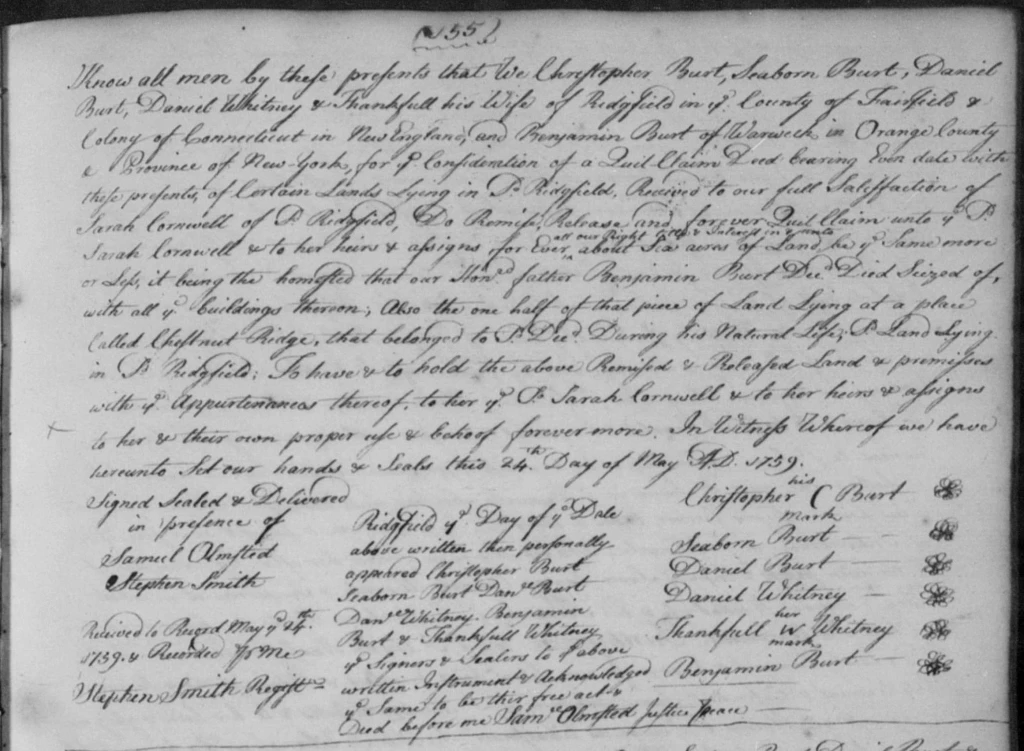
A fascinating divorce case was heard by the Fairfield County Superior Court and General Court of the Colony of Connecticut between 1738 and 1741. The petitioner was John Wallis and the respondent was Sarah Burt, both of Ridgefield. A child was born to Sarah just over six months after they married. That wasn’t the problem. The problem was that John did not think the child appeared White enough for him to be the father. The townsfolk voiced their opinions in depositions to the court. Those voices and trajectories of those lives affected provide insights on the construction of race and relations in 18th-century New England .
“A Child Said To Be Born”: John Wallis’s three petitions for divorce
John Wallis petitions the Superior Court On April 4, 1738, at sundown, a child was born to Sarah Burt Wallis — or in the legalese of subsequent court records, this was “a Child Said to be born of ye body of Sarah Wallis alias Burt.” The child became the basis for a petition for divorce…


Another divorce in the neighbourhood: David Scott, polygamist
In his petition to the General Court, John Wallis said he desired a dispensation or divorce “to secure him from any penalty of ye Laws Respecting Polygamy” should he marry another. Polygamy was not theoretical as a prospect for John. Although divorce cases were not common in early 18th-century Connecticut, in February 1722/23,1 David Scott…
 Lisa Gannett